

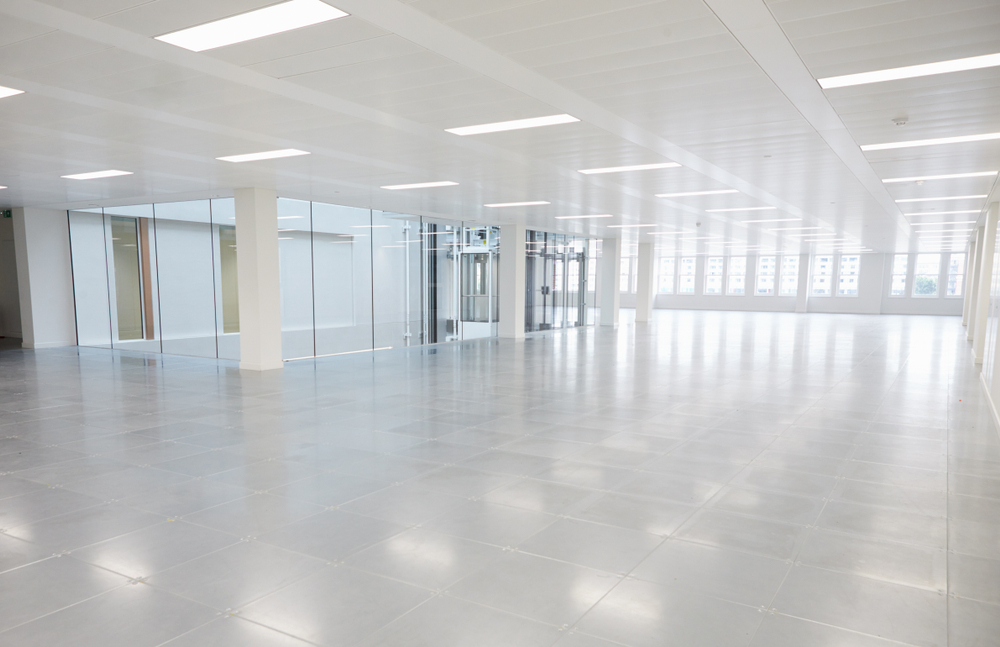
Empty offices have a way of echoing. It’s not just the silence—it’s the missed opportunity. Rows of unused desks, darkened suites, and “For Lease” signs that seem to linger a little too long can quietly drain the energy (and value) from a property. But what if those same spaces could be reimagined—not just filled, but brought to life?
That’s the promise of flex office.
Across the country, underperforming office space is being transformed into dynamic, revenue-generating environments by embracing flexible workspace models. The shift isn’t simply cosmetic. It’s operational, experiential, and, when executed well, deeply strategic. Landlords who once chased long-term tenants are now finding new momentum by offering adaptable, service-driven office solutions that align with how people actually work today.
The “before” picture is familiar: large footprints built for a single tenant, rigid lease structures, and amenities that feel dated before the ink dries. These environments struggle especially in suburban markets, where demand has shifted and traditional leasing velocity has slowed. Vacancy becomes a lingering problem rather than a temporary phase.
The “after” tells a different story.
Flex office repositions space to meet modern expectations. Instead of betting on one tenant to fill an entire floor, the space is thoughtfully divided into a mix of private offices, team suites, coworking areas, and shared amenities. Design plays a role, but it’s the programming and management that truly activate the environment—hospitality-driven service, community engagement, and built-in flexibility that allows businesses to scale up or down without friction.
The result is not just higher occupancy—it’s a fundamentally different asset.
“Flex office isn’t just about filling space—it’s about creating an environment people want to be part of,” says Karen Condi, President of Workspace Strategies. “When you shift from a static model to a service-oriented one, you’re not only addressing vacancy—you’re unlocking new demand that didn’t exist before.”
That demand is coming from a wide range of users. Startups and small businesses value the ability to grow without long-term commitments. Enterprise companies are leveraging flex space for satellite offices and project teams. Even remote workers are seeking out professional environments that offer structure, connection, and amenities they can’t replicate at home.
For landlords, this diversification reduces reliance on any single tenant and introduces multiple revenue streams within the same footprint. Memberships, short-term leases, meeting room bookings, and ancillary services all contribute to a more resilient financial model.
Suburban office properties, in particular, stand to benefit. With shifting commuter patterns and an increased focus on convenience, well-executed flex spaces can capture local demand that might otherwise bypass traditional office settings. A formerly quiet building can become a hub of activity—coffee brewing in shared lounges, meetings happening behind glass walls, and a steady flow of professionals coming and going throughout the day.
Of course, transformation doesn’t happen by accident.
Successful flex office conversions require careful planning, market insight, and operational expertise. From determining the right mix of space types to implementing technology systems and staffing models, every decision impacts the end result. It’s not just about redesigning a floor—it’s about rethinking how the space functions as a business.
That’s where the right guidance makes all the difference.
Workspace Strategies specializes in helping landlords navigate this transition, turning underperforming assets into vibrant, flexible workplaces that attract today’s tenants. With a deep understanding of both hospitality and real estate, their approach goes beyond theory—focusing on practical, revenue-driven solutions tailored to each property.
Vacancy doesn’t have to be the end of the story. With the right strategy, it can be the beginning of something far more valuable: a space that works harder, feels alive, and meets the moment.
If your building has more quiet corners than you’d like, it might be time to rethink what’s possible.
